Originally published: March 31, 2023
Last updated: February 2026
Kimbap (김밥) is one of the most popular Korean foods and is often compared to Japanese sushi (寿司 or 鮨) because of its similar rolled appearance. While sushi is a world-famous Japanese dish, kimbap is a uniquely Korean food with its own ingredients, flavor profile, and cultural background. Many people confuse the two, but once you understand how they differ, it becomes clear that kimbap is not simply “Korean sushi.”
In this article, I’ll explain what kimbap is, how it differs from sushi, and why both dishes are delicious in their own way.
What Is Kimbap?
Kimbap literally means “seaweed rice”– “kim” (김) refers to dried seaweed, and “bap” (밥) means rice. It is a traditional Korean dish made by rolling seasoned rice and various fillings in seaweed and slicing it into bite-sized pieces.
Kimbap is commonly eaten as a quick meal, lunchbox food, picnic dish, or street food in Korea. You can find it almost everywhere—from convenience stores and street stalls to restaurants and home kitchens.
Kimbap vs Sushi: 7 Key Differences
Although kimbap and sushi may look similar, they differ in several important ways.
1. Origin
Kimbap is a Korean dish, while sushi is a Japanese dish. Kimbap developed as an everyday Korean food, often made at home or packed for outings. Sushi, on the other hand, has roots in Japanese preservation techniques and later evolved into a refined cuisine.
2. Rice Seasoning
Both dishes use short-grain rice, but the seasoning is completely different.
- Kimbap rice is seasoned with sesame oil and salt, giving it a savory and nutty flavor.
- Sushi rice is seasoned with vinegar, sugar, and salt, creating a tangy flavor.
This difference alone makes kimbap taste very different from sushi.
3. Seaweed
Both dishes are wrapped in seaweed, but the texture and preparation vary.
Sushi typically uses thinner, crisper nori.
Kimbap uses dried seaweed (kim) with a slightly chewy texture.
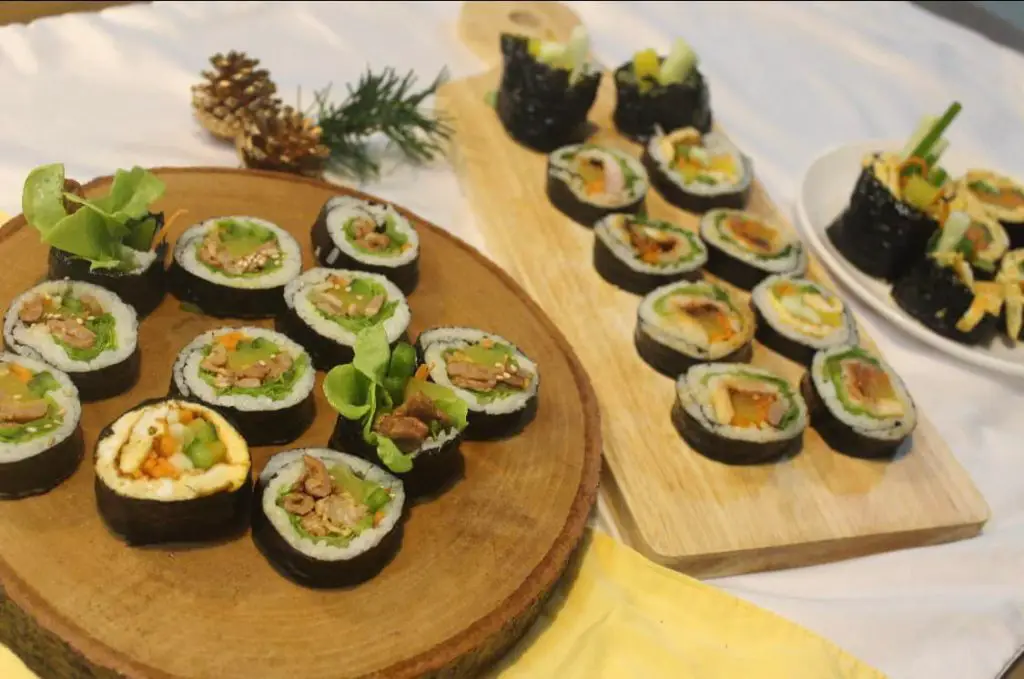
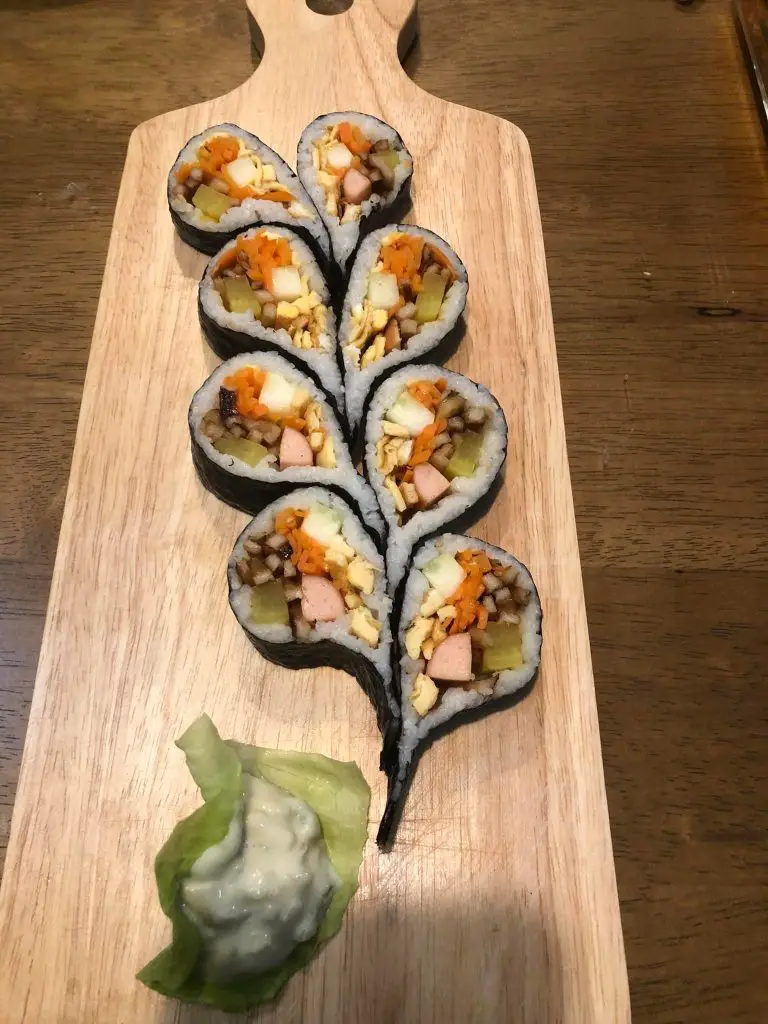
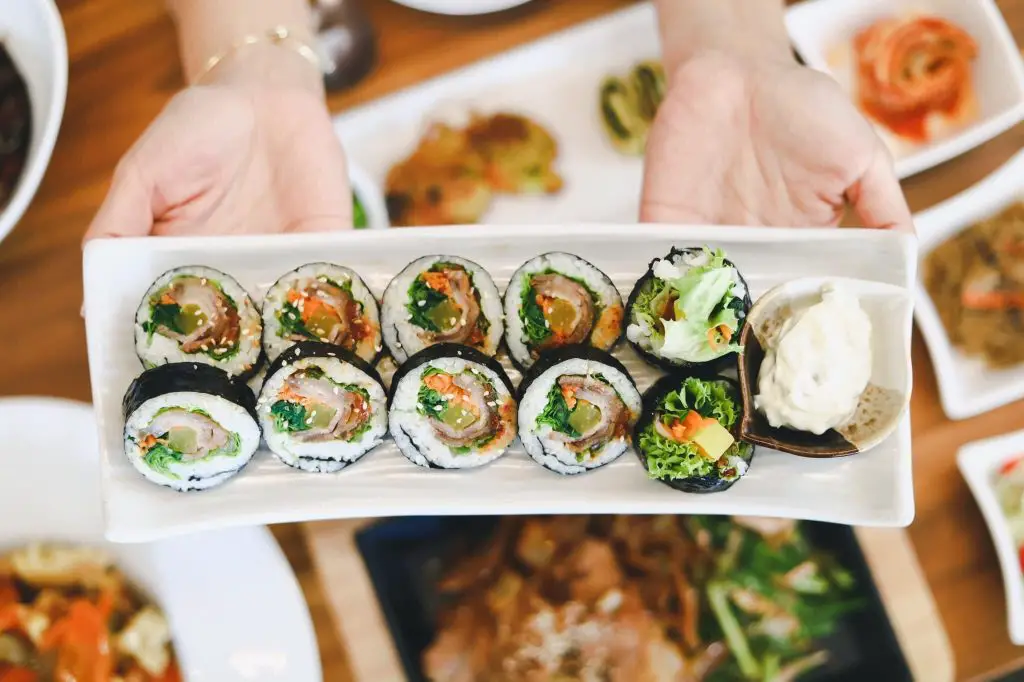
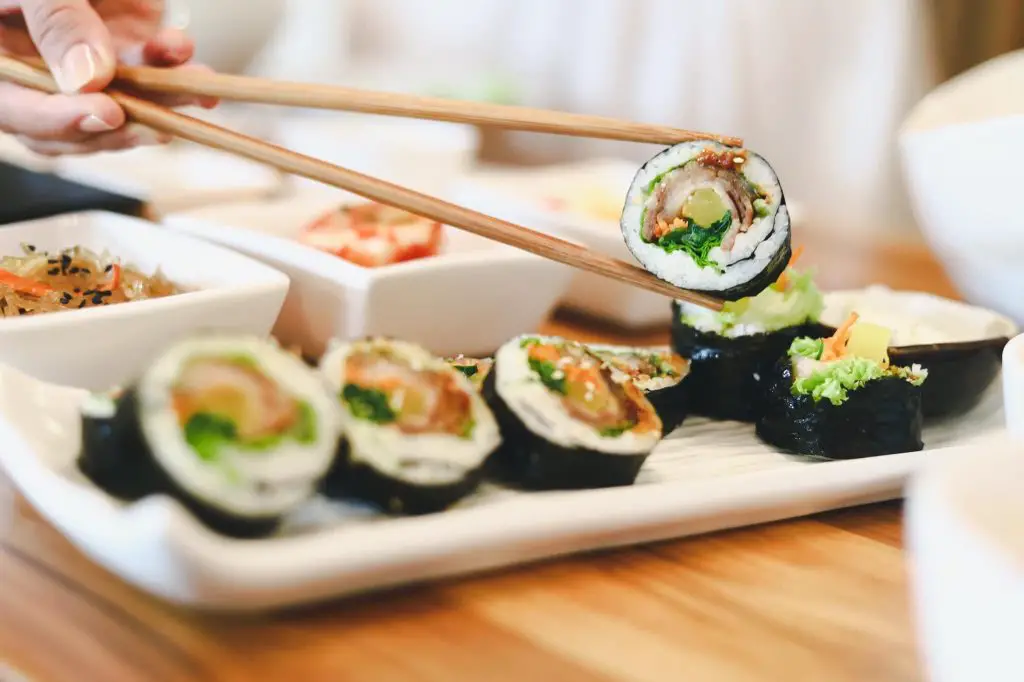
Korean Kimbap (김밥)

4. Fillings
Kimbap fillings are usually fully cooked and often include vegetables, egg, beef, tuna, or ham. Common additions include pickled radish (danmuji) and spinach. Some varieties even include kimchi.
Sushi fillings often feature raw fish, seafood, or lightly cooked ingredients, and are paired with wasabi, soy sauce, and pickled ginger.
Because of this, kimbap tends to have a milder, more balanced flavor, while sushi has a sharper and more distinct taste.

5. Shape
Kimbap is usually rolled into thick cylindrical rolls and sliced into larger pieces. Sushi comes in many shapes, including rolls, nigiri, and cones.
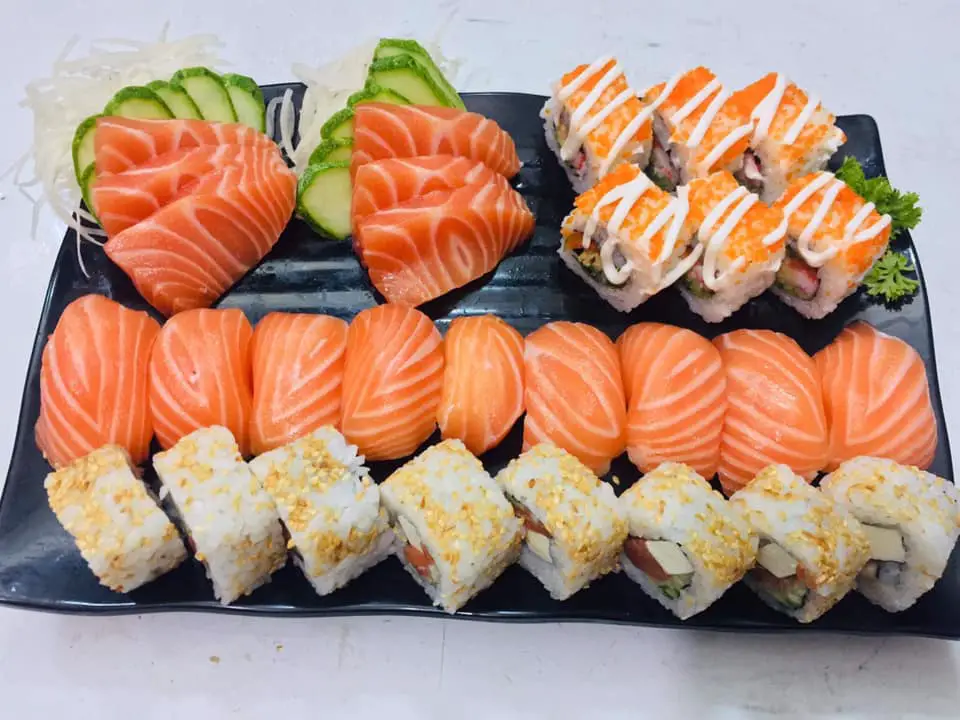
Japanese cuisine Sushi (寿司 or 鮨)

6. Size
Kimbap pieces are generally larger and more filling than sushi rolls. Sushi is often served in smaller, bite-sized portions.
7. Varieties
There are many types of kimbap, including:
- Classic kimbap
- Tuna kimbap
- Kimchi kimbap
- Mayak (mini) kimbap
- Chungmu kimbap
Popular sushi varieties include nigiri, sashimi, maki, uramaki, and temari.
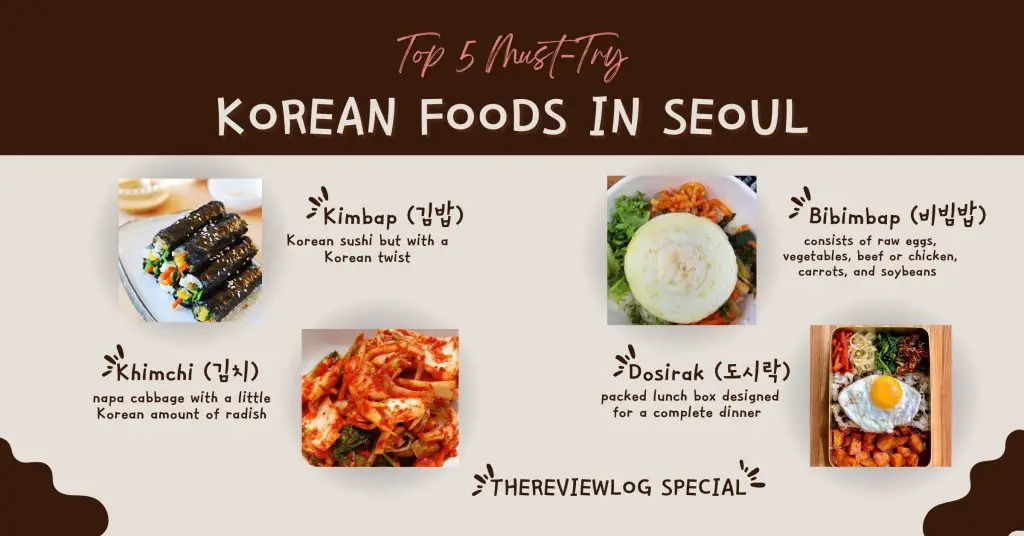
Korean Kimbap (김밥)
Kimbap is deeply rooted in Korean food culture. It is commonly eaten for breakfast, lunch, or as a snack. Many Koreans associate kimbap with childhood memories, school trips, and family outings.
Because the ingredients are cooked and well-balanced, kimbap is also considered a comfort food and a convenient meal. Vegetarian versions are widely available, making it accessible to many dietary preferences.
Japanese Sushi Explained
Sushi is a more refined dining experience for many people and is often associated with raw fish and seafood. The flavor of sushi is sharper due to vinegar-seasoned rice and wasabi. Sushi is ideal for those who enjoy bold, fresh flavors and raw ingredients.
Kimbap or Sushi: Which Should You Choose?
From my personal experience, both dishes are delicious, but they suit different tastes.
If you enjoy raw fish, tangy flavors, and wasabi, sushi is a great choice.
If you prefer cooked ingredients, mild seasoning, and a filling meal, kimbap is the better option.
Rather than choosing one over the other, it’s best to appreciate each dish for what it is.
Frequently Asked Questions About Kimbap
Is kimbap the same as sushi?
No. While they look similar, kimbap and sushi differ in seasoning, fillings, and overall taste.
Is kimbap healthy?
Yes. Kimbap often includes vegetables, eggs, and protein, making it a balanced and satisfying meal.
Can vegetarians eat kimbap?
Yes. Many kimbap varieties are vegetarian and contain only vegetables and egg.
Final Thoughts
Kimbap and sushi may look alike, but they are distinct dishes with different histories, flavors, and cultural meanings. Kimbap stands out as a uniquely Korean food that is simple, comforting, and widely loved.
If you want to explore more Korean traditional foods, kimbap is a great place to start.